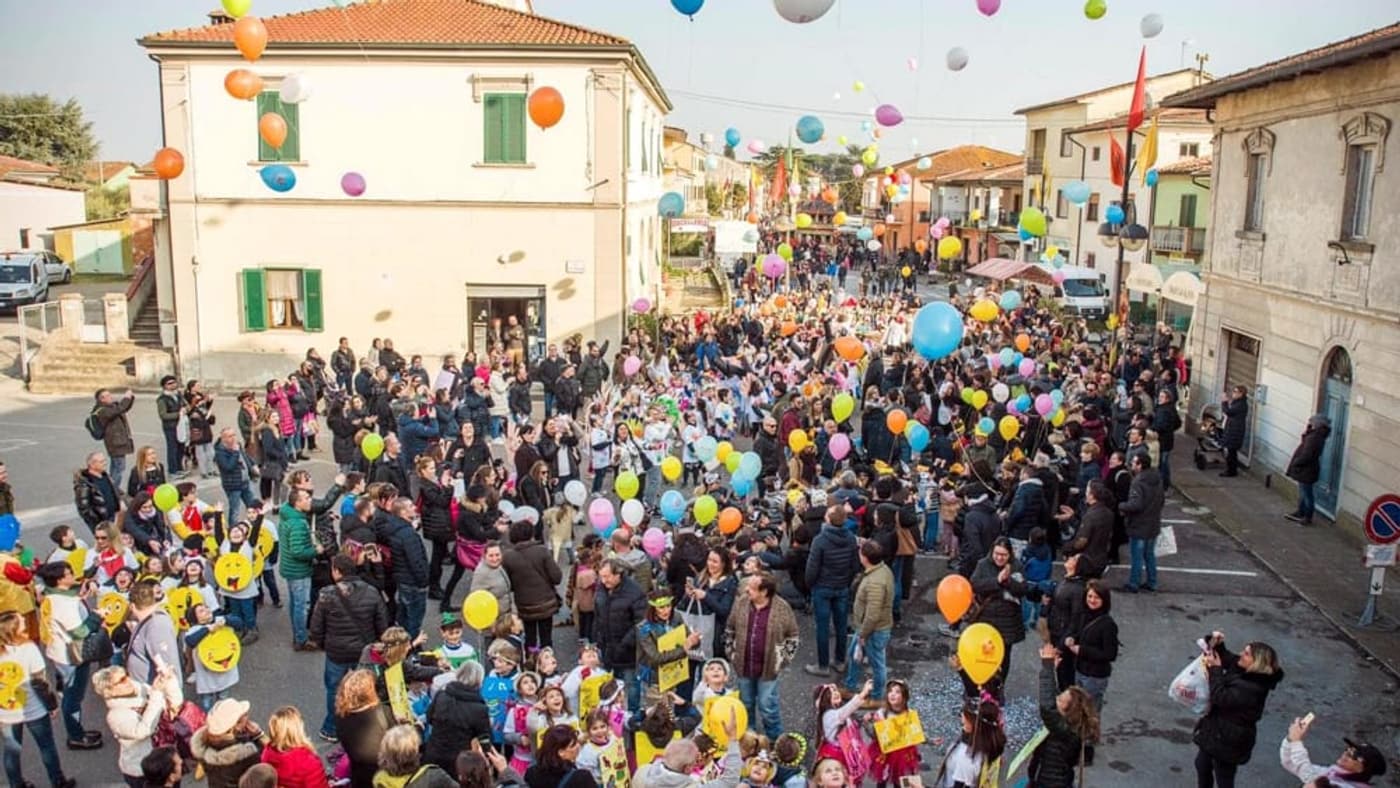
Every late winter, on the Sundays before Martedì Grasso, a village of a couple of thousand people rolls full-size allegorical floats through its own streets. Five masked parades, thousands of visitors, and children — always children — as the protagonists. The village calls itself Paese-Spettacolo, the show-village, and for seventy years the Carnevale has been the reason why: "Carnevale dei Bambini", the locals say, "is a synonym of Orentano".
The Carnevale dei Bambini
A children's carnival, since 1956
How it began — 1956
The idea came from the parish priest, the arciprete Don Livio Costagli, who — as the village verse remembers it — declared that if Viareggio and Rio could have a carnival, "voglio farlo anch'io": I’ll make one too, and give my kids a laugh.
The first "float" was a donkey cart: Bartoli’s donkey, decked out for the feast, pulling a cartload of children masked in their grandmothers’ skirts and bonnets, led by two musicians — Celestino "Baffi della Chiesa" with his patched-up squeeze-box and the "Barone" with his big guitar. The donkey brayed and kicked, nobody got hurt, everybody laughed, and the crowds came from Livorno and Florence until they jammed the Strada Provinciale. By the end of the night — the verse insists — forty demijohns of acquavite had been emptied, and a committee had been formed in the parish hall to do it all again.
From donkey cart to Kolossal
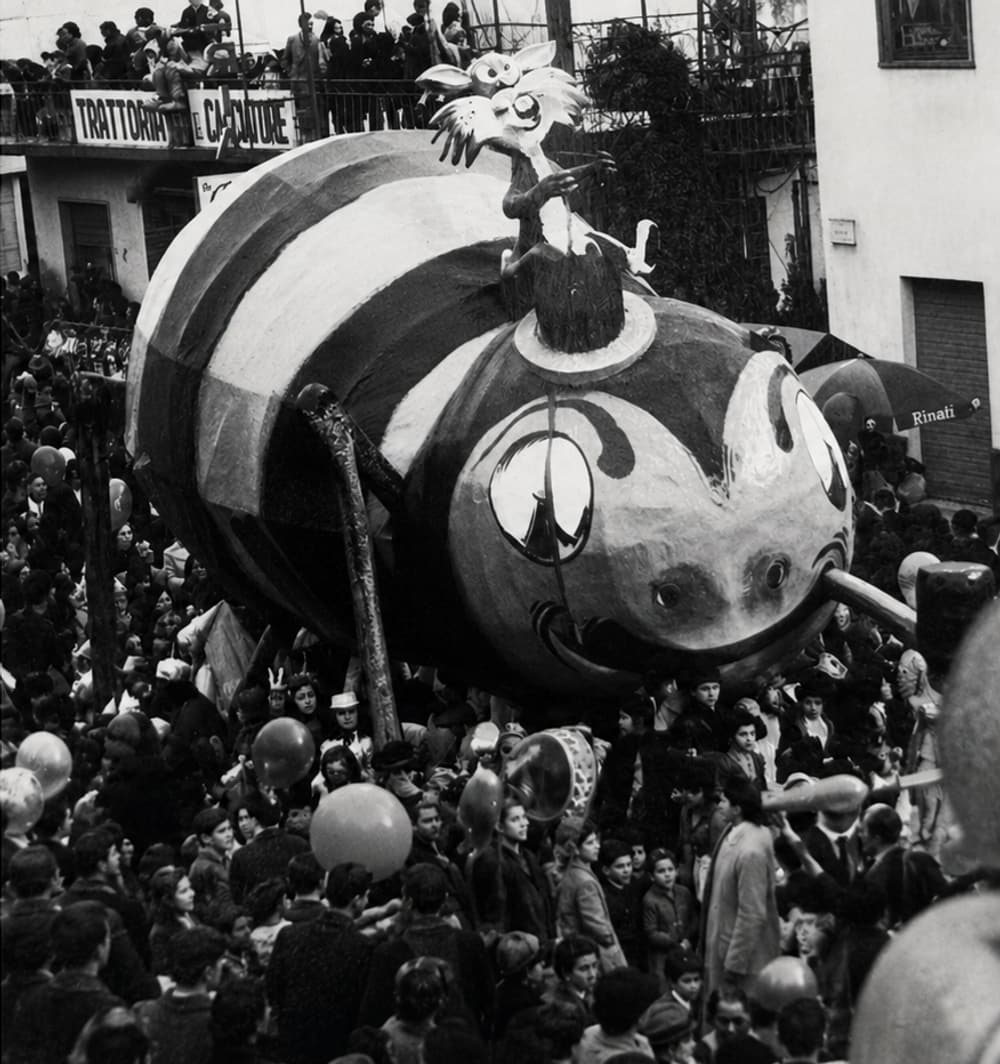
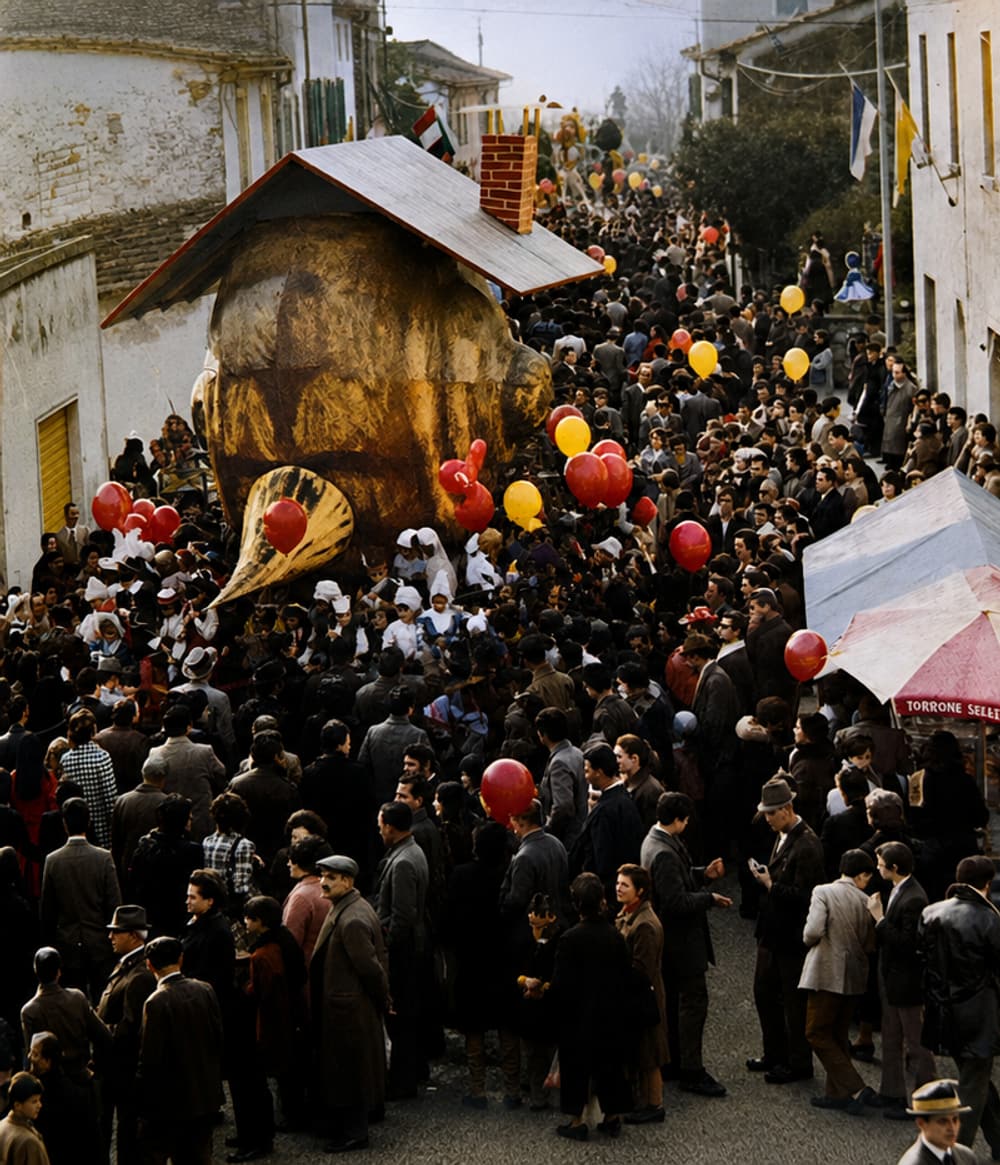
From the ciuco col carretto, the village graduated to what the anniversary book proudly calls "mastodontic allegorical floats" — wood, papier-mâché and later polystyrene, shaped every winter by the village’s self-taught "wizards of cartapesta". Farmers, workers and students put in three months of unpaid evenings at the Capannone, the float-builders’ shed, with one shared goal: make it more beautiful than last year.
In 1973 the village made it official, founding a no-profit society whose statute exists to build and shelter floats; by the silver-anniversary "Kolossal" edition of 1980 the line-up included a Far-West train, an aircraft carrier, Goldrake and Captain Harlock, the Big Bad Wolf with the Three Little Pigs — and a giant birthday cake for the Carnevale itself. All of it from a village of, back then, some 1,500 souls, a short drive from mighty Viareggio — which is exactly the point. As the first-year verse joked: "give us a few years and we’ll beat Viareggio!"
The Carnevale today
Seventy years on, the recipe is unchanged: five corsi on the Sundays before Shrove Tuesday (the dates follow Easter), the floats, the confetti, balloons over the piazza, La Ranocchia opening the parades — and the children of the first editions now walking beside their own grandchildren in costume. On Martedì Grasso the festival closes with fireworks and the burning of the Testone, the carnival’s giant straw effigy.
If your stay falls in Carnival season, check what’s on for this year’s parade dates — and come hungry: the same pastry chefs behind the Festa del Bignè are out in force.